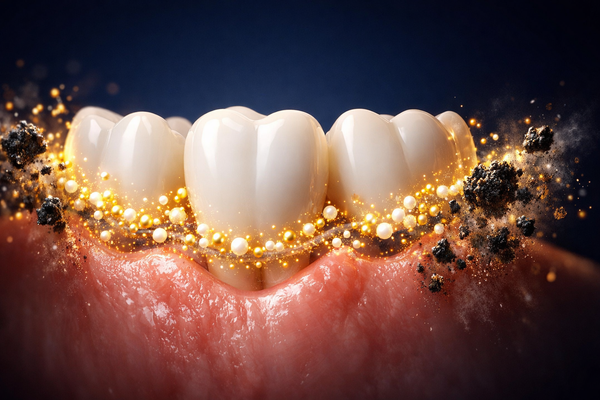
Every day, your teeth lose minerals. Every sip of coffee, every bite of fruit, every breath of air starts a microscopic process called demineralization. Your enamel is under constant attack. The question is not whether it happens. It is whether your body can keep up.
Your saliva contains calcium and phosphate ions that partially restore enamel through a process called remineralization. It is a continuous cycle, one that kept human teeth healthy for thousands of years. But the modern diet, acidic beverages, refined sugars, frequent snacking, disrupts this balance in ways our biology was never designed to handle.
For decades, fluoride was the only answer dentistry offered. But in Japan, researchers found something different. Something that works with the tooth, not on it.
What is Nano-Hydroxyapatite?
Hydroxyapatite is the mineral that makes up 97% of your tooth enamel and 70% of your dentin. It is the hardest substance in the human body, harder than bone. Nano-hydroxyapatite (n-HA) refers to synthetic particles of this same mineral, engineered at the nanoscale: between 20 and 80 nanometers. They are bio-identical to the mineral already in your teeth.
The story begins not in a dental lab, but in space. In the 1970s, NASA researchers discovered that astronauts were losing bone and tooth mineral density during missions due to the absence of gravity. They developed hydroxyapatite-based compounds to help restore this loss. The technology transferred to dentistry in 1980, when the Japanese company Sangi introduced the first hydroxyapatite toothpaste to the consumer market.
By 1993, the Japan Dental Association officially recognized hydroxyapatite as an anti-caries agent. Today, n-HA toothpastes are standard in Japan and increasingly adopted across Europe, Canada, and beyond.
The fundamental difference from fluoride is this: fluoride creates a different mineral on the tooth surface called fluorapatite. It is a protective coating. Nano-hydroxyapatite fills the gaps with the same material as the tooth itself. It is repair versus coating.

How Nano-HA Repairs Enamel
The mechanism works in four stages:

- Adsorption. Nano-HA particles bind to the tooth surface, attracted by the chemical similarity between synthetic and natural hydroxyapatite.
- Integration. The nanoparticles fill microscopic cracks, pores, and early-stage lesions in the enamel. Because they match the crystalline structure of natural enamel, they integrate seamlessly.
- Protection. The repaired surface forms a dense, acid-resistant layer that shields the tooth from further erosion by dietary acids and bacterial metabolites.
- Accumulation. With repeated use, the mineral deposits build up. The repair becomes permanent, measurably increasing enamel density over time.
A 2011 study by Tschoppe et al., published in the Journal of Dentistry, demonstrated that nano-hydroxyapatite toothpaste restored artificial enamel lesions significantly more effectively than a fluoride-free placebo.[1]Tschoppe P, et al. Enamel and dentine remineralization by nano-hydroxyapatite toothpastes. Journal of Dentistry. 2011;39(2):142-149.
In 2019, Amaechi et al. conducted a direct comparison between nano-hydroxyapatite and fluoride toothpaste for enamel remineralization in children. The result: both were equally effective.[2]Amaechi BT, et al. Comparative efficacy of a hydroxyapatite and a fluoride toothpaste for prevention and remineralization of dental caries in children. BDJ Open. 2019;5:18.
Nano-HA vs Fluoride: What the Research Says
This is not an anti-fluoride argument. Fluoride works. Decades of public health data confirm its role in reducing cavities worldwide. But nano-hydroxyapatite offers a biomimetic alternative with a fundamentally different mechanism, one that repairs rather than coats.

| Property | Fluoride | Nano-Hydroxyapatite |
|---|---|---|
| Mechanism | Forms fluorapatite on surface | Fills enamel with bio-identical mineral |
| Remineralization efficacy | Proven effective | Equally effective (Amaechi 2019) |
| Safety if swallowed | Risk at high doses (fluorosis) | Safe if swallowed (bio-identical) |
| Effect on microbiome | Minimal | No negative effect |
| Safe for children | With caution (dosage risk) | Yes, no dosage risk |
| Sensitivity relief | Limited effect | Seals dentine tubules (reduces sensitivity) |
A 2017 systematic review by Kensche et al. confirmed that hydroxyapatite-based rinses reduced initial bacterial colonization on enamel surfaces without disrupting the oral microbiome.[3]Kensche A, et al. Efficacy of a mouthrinse based on hydroxyapatite to reduce initial bacterial colonisation in situ. Archives of Oral Biology. 2017;80:so32-37. Limeback et al. (2023) published a comprehensive review in the Canadian Journal of Dental Hygiene, concluding that n-HA is a credible, evidence-based alternative to fluoride for caries prevention.[4]Limeback H, et al. Hydroxyapatite and its role in preventive dentistry. Canadian Journal of Dental Hygiene. 2023;57(1):13-21.

The Sensitivity Solution
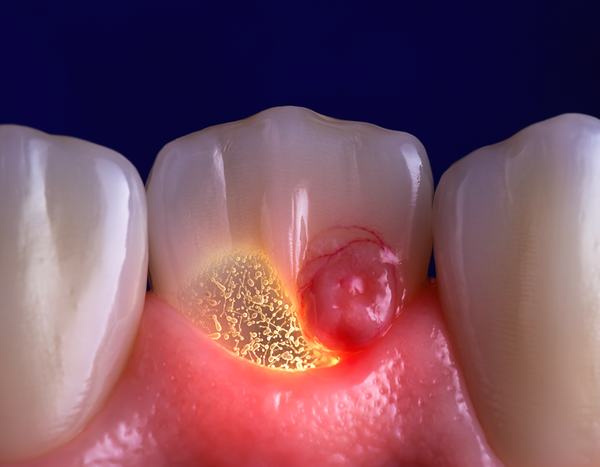
Tooth sensitivity is one of the most common dental complaints, affecting an estimated 1 in 8 adults. The cause is almost always the same: exposed dentine tubules. These are microscopic channels that run from the tooth surface to the nerve. When enamel wears thin or gums recede, these tubules become exposed. Hot, cold, sweet, or acidic substances trigger a sharp, often painful response.

Most sensitivity toothpastes work by numbing the nerve (potassium nitrate) or depositing a temporary barrier. Nano-hydroxyapatite takes a different approach: it physically seals the tubules by depositing bio-identical mineral inside them.
Vano et al. (2018) demonstrated that n-HA significantly reduced dentine hypersensitivity after just four weeks of daily use, with effects persisting after the treatment period ended.[5]Vano M, et al. Effectiveness of nano-hydroxyapatite toothpaste in reducing dentin hypersensitivity. Journal of Oral Rehabilitation. 2018;45(8):615-621.
If you experience tooth sensitivity, our article Teeth Sensitivity, Properly Explained covers the underlying causes in detail.
Why Tablets Instead of Paste
If nano-hydroxyapatite is so effective, why does CALQIX deliver it in a tablet rather than a traditional toothpaste? The format is not arbitrary. It solves five specific problems:
- Higher concentration. Traditional toothpaste is 40-50% water by weight. A dry tablet eliminates the water, allowing a higher concentration of active ingredients per dose.
- No plastic tubes. Over 1.5 billion toothpaste tubes end up in landfills each year. Tablets ship in recyclable packaging with a fraction of the transport weight.
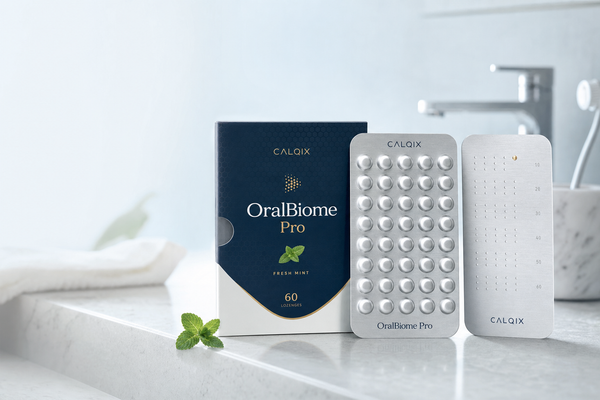
- Precise dosing. Each tablet contains a consistent, measured amount of n-HA and probiotics. No squeezing, no guessing.
- Probiotic compatibility. This is the critical one. Live probiotic strains like Streptococcus salivarius K12 and M18 cannot survive in a wet paste. The moisture, preservatives, and pH of conventional toothpaste kill beneficial bacteria within days. A dry tablet preserves them until the moment of use.
- Travel-friendly. Compact, no liquid restrictions, no leaking tubes.
The tablet format is not just about sustainability. It is the only way to combine remineralizing minerals with live probiotic strains in a single product. A wet paste would kill the beneficial bacteria before they reach your mouth.
For the full science behind why your oral microbiome needs probiotics, read: The Science of Your Oral Microbiome: Why Most Oral Care Gets It Wrong.
The Oral-Systemic Connection Revisited
In our previous article on the oral microbiome, we explored how oral bacteria can enter the bloodstream through inflamed gums, contributing to cardiovascular disease, diabetes complications, and adverse pregnancy outcomes. The research is robust and growing.
Nano-hydroxyapatite adds another dimension to this picture. Strong, intact enamel is the first physical barrier against bacterial invasion. When enamel demineralizes, micro-lesions form. These become niches where pathogenic bacteria accumulate, produce acid, and eventually penetrate into deeper tooth structures.
By repairing enamel at the molecular level, n-HA reduces the surface area available for harmful bacterial colonization. Fewer niches for pathogens means less acid production, less inflammation, and a lower risk of systemic bacterial translocation.
If our previous article explained why your microbiome matters, this one explains why your enamel matters. They are two sides of the same coin. OralBiome Pro addresses both.
How to Use Nano-HA Effectively
To get the most from nano-hydroxyapatite, follow these evidence-based guidelines:

- Use after brushing, not as a replacement. Brush your teeth normally first, then use the tablet.
- Let the tablet dissolve completely on your tongue. Contact time with the tooth surface is critical for mineral deposition.
- Do not eat or drink for 30 minutes after use. This allows the n-HA particles to bind and integrate undisturbed.
- Use daily for at least 4 weeks for measurable results. Enamel remineralization is cumulative.
- Best timing: before bed. During sleep, saliva production drops significantly. An n-HA application before bed provides the longest uninterrupted contact time with your teeth.

The Research Continues
Nano-hydroxyapatite is not a trend. It is a material that has been used in bone grafting and dental restoration for decades. What is new is its application in daily preventive care, in a format accessible to everyone.
Hannig and Hannig (2010), writing in Nature Nanotechnology, predicted that nanomaterials would transform preventive dentistry by enabling biomimetic repair at the molecular level.[6]Hannig M, Hannig C. Nanomaterials in preventive dentistry. Nature Nanotechnology. 2010;5(8):565-569. That prediction is now reality.
At CALQIX, we combine nano-HA with clinically studied probiotic strains because oral health is not a single-ingredient problem. Your teeth need minerals. Your microbiome needs balance. OralBiome Pro delivers both.
Your enamel deserves repair, not just protection.
References
- Tschoppe P, et al. Enamel and dentine remineralization by nano-hydroxyapatite toothpastes. Journal of Dentistry. 2011;39(2):142-149.
- Amaechi BT, et al. Comparative efficacy of a hydroxyapatite and a fluoride toothpaste for prevention and remineralization of dental caries in children. BDJ Open. 2019;5:18.
- Kensche A, et al. Efficacy of a mouthrinse based on hydroxyapatite to reduce initial bacterial colonisation in situ. Archives of Oral Biology. 2017;80:32-37.
- Limeback H, et al. Hydroxyapatite and its role in preventive dentistry. Canadian Journal of Dental Hygiene. 2023;57(1):13-21.
- Vano M, et al. Effectiveness of nano-hydroxyapatite toothpaste in reducing dentin hypersensitivity. Journal of Oral Rehabilitation. 2018;45(8):615-621.
- Hannig M, Hannig C. Nanomaterials in preventive dentistry. Nature Nanotechnology. 2010;5(8):565-569.
Interactive