Most people treat their teeth like tiles: fixed structures that wear down with use and stay damaged once chipped. That's wrong. Your enamel is engaged in a constant biological negotiation — losing minerals to the acids in your food and drink, then trying to reclaim them from your saliva and surroundings.
The question isn't whether your teeth remineralise. They do, every single day. The question is whether the process is winning or losing — and whether you're actively helping it.
01
What Enamel Actually Is (And Why It Can't 'Grow Back')
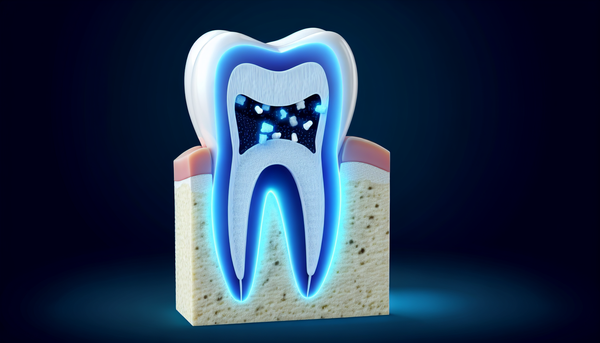
Tooth enamel is the hardest biological material in the human body — harder than bone, harder than dentin, and harder than any other tissue you produce. It's composed of roughly 96% inorganic mineral, primarily in the form of hydroxyapatite crystals: calcium and phosphate arranged in an incredibly dense, interlocking matrix.

Here is the fundamental tension: enamel is produced by specialised cells called ameloblasts. These cells are only active during tooth development. Once your adult teeth fully emerge, those cells die. They cannot be reactivated. This is why dentists say enamel 'can't grow back' — no new enamel cells exist to produce it.
But that statement misses something critical: enamel doesn't need to grow back. It needs to remineralise. And that is a fundamentally different — and entirely possible — biological process.
Enamel cannot regenerate (no new tissue). But enamel can remineralise — meaning existing crystal structures can be reinforced and repaired at the molecular level. This is not a marketing claim. It is textbook dental biology.
The Constant War: Demineralisation vs. Remineralisation
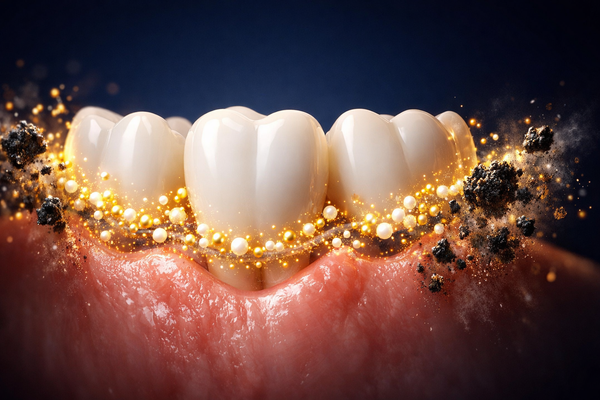
Every time you eat or drink anything acidic — citrus, coffee, wine, sparkling water, even fruit — the pH in your mouth drops. When the pH falls below 5.5, the hydroxyapatite crystals in your enamel begin to dissolve. Calcium and phosphate ions detach from the crystal lattice and enter solution.
This is demineralisation. It happens to your teeth multiple times every single day.

The good news: saliva is your body's natural counter. It contains calcium and phosphate ions, which, given a neutral or slightly alkaline pH, will spontaneously deposit back onto the enamel surface — partially rebuilding the crystal lattice. This is remineralisation.
The problem is balance. If your diet is consistently acidic, if you snack frequently throughout the day, or if your saliva flow is reduced, demineralisation consistently outpaces remineralisation. Over months and years, this produces softer, thinner, more sensitive enamel — and eventually, structural damage that no amount of remineralisation can reverse.
Why Saliva Alone Isn't Enough
Your saliva is genuinely remarkable. It neutralises acids, delivers calcium and phosphate to the tooth surface, contains antimicrobial enzymes, and maintains the right chemical conditions for remineralisation. Healthy saliva flow is one of the most important factors in long-term dental health.
But saliva was designed for a pre-industrial diet. It was not designed to handle:
- Coffee or citrus juice before work every morning
- Sparkling water throughout the day (pH 3.5–4.5)
- Processed snacks with fermentable sugars every few hours
- Wine with dinner
- Energy drinks, kombucha, or flavoured sparkling water
Every one of those events triggers a demineralisation cycle. If you're having five or six of them daily, your saliva's natural remineralisation capacity is fighting an uphill battle — and losing.
"The modern diet creates a chronic acid environment that shifts the demineralisation-remineralisation balance decisively against the tooth. Supplemental remineralisation agents are not a luxury — they are a rational response to dietary reality." — Adapted from Fejerskov & Kidd, Dental Caries: The Disease and its Clinical Management
Enter Nano-Hydroxyapatite: Rebuilding at the Molecular Level
This is where the science becomes genuinely interesting — and where CALQIX's approach departs from conventional oral care.
Nano-hydroxyapatite (nano-HA) is a synthetic form of the exact mineral that makes up your enamel. The critical word is 'nano' — at a particle size of 20–80 nanometres, nano-HA particles are small enough to physically integrate with the existing hydroxyapatite crystal lattice in your enamel.

This is not a surface coating. It is not a temporary polish or whitening agent. Nano-HA particles adsorb onto enamel surfaces, fill submicroscopic defects, and integrate into areas of partial demineralisation — effectively doing what saliva calcium and phosphate do, but with greater precision and at a scale that matches the enamel crystal structure itself.
Nano-hydroxyapatite has been studied in peer-reviewed clinical literature since the 1970s, when it was pioneered by NASA for use in astronaut oral care. Over 40 years of published research supports its efficacy for enamel remineralisation, dentinal tubule occlusion (reducing sensitivity), and plaque reduction. It is not a trend. It is established dental materials science.
What nano-HA does not do, and has never claimed to do, is recreate lost enamel from nothing. The goal is prevention and maintenance — and the earlier you start, the more enamel you protect.
05The Protocol That Makes the Difference
Remineralisation doesn't happen in a single application. It is a cumulative process that depends on consistent mineral availability, sufficient contact time, a clean enamel surface, and an oral pH above 5.5 during mineral uptake.
This is why the two-step approach matters. Brushing alone — even with nano-HA — can only reach the exposed surfaces of your teeth. The areas between teeth and below the gumline remain inaccessible.

Step 01 is mechanical preparation: using a precision water flosser to flush biofilm and debris from interproximal spaces and subgingival pockets. This clears the surface so that remineralisation agents can reach the enamel where it's most vulnerable.
Step 02 is mineralisation: delivering nano-HA to a clean surface, where it can integrate with the crystal lattice without competing with food debris, bacteria, or residual acid.
The 30-day timeframe is significant. Clinical studies showing measurable enamel hardness improvements with nano-HA typically run over 28–30 day periods. This is the minimum duration for the cumulative deposition process to produce detectable change. It is not a marketing number.
What This Means for Your Daily Routine
Most people's oral care routine is two steps: brush in the morning, brush at night. For most people in a pre-industrial diet context, this would probably be adequate. For most people today, it isn't — which is why dental erosion is now classified as a modern epidemic, affecting an estimated 30–50% of adults in Europe.

The changes that protect your enamel long-term are not dramatic. They are:
- Wait 30 minutes after acidic food or drink before brushing — give saliva time to raise pH first
- Floss before brushing, not after — clear debris before mineral contact
- Use a water flosser to reach subgingival areas that string floss cannot reliably clean
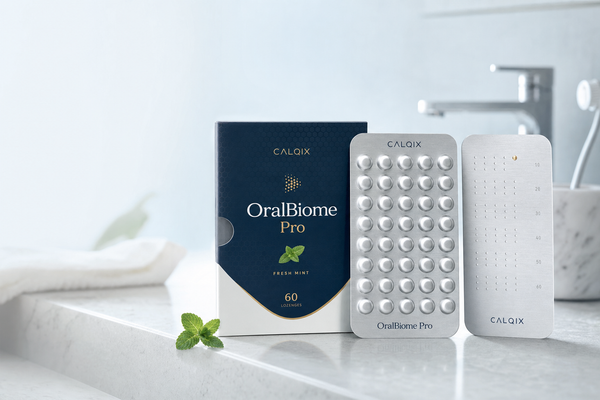
- Choose nano-HA for consistent molecular-level remineralisation
- Reduce frequency of acidic events rather than trying to eliminate them entirely
The compounding effect of these habits over 30, 60, and 90 days is measurable. Dentists in clinical studies report patients with noticeably reduced sensitivity, smoother enamel surfaces under tactile examination, and improved probing depths after consistent use.
Everything in this article — the two-step protocol, the clinical statistics, the FlowCore engineering — is mapped out interactively on our homepage. See exactly how Step 01 clears the surface, and how Step 02 rebuilds it.
Explore the Protocol →The science is real. The protocol is straightforward. Your teeth are already trying to rebuild — the question is whether you're giving them what they need.